Transparency and accountability are core pillars of governance in Kiribati. The government has established clear mechanisms to ensure public oversight of finances, policies, and executive action.
Each year, the Ministry of Finance and Economic Development (MFED) publishes detailed Budget Estimates outlining projected revenues and expenditures for the upcoming fiscal year. These budgets are prepared through consultations with all ministries and are submitted to the Maneaba ni Maungatabu (House of Assembly) for parliamentary scrutiny before being made public.
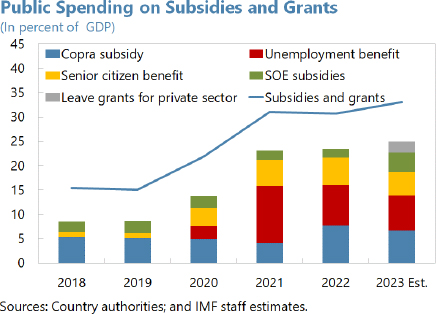
Citizens and stakeholders can access the latest Annual Budgets and Accounts on the MFED website. These reports provide transparent breakdowns of spending across priority sectors such as education, health, infrastructure, and climate adaptation. To improve accessibility, many documents include simplified charts showing how funds are distributed among development projects.
Financial transparency is complemented by openness in political communication. The government regularly publishes official addresses and speeches by the Beretitenti (President), including the annual policy address to Parliament—comparable to a “State of the Nation” speech—which outlines achievements, challenges, and future priorities. Independence Day messages and speeches delivered during national events are also made publicly available. When visiting dignitaries, such as regional leaders or United Nations representatives, deliver speeches in Kiribati, transcripts are published to keep citizens informed about both national and international developments.
The Budgets and Addresses section maintains an archive of past documents, allowing the public to track fiscal trends and government commitments over multiple years. This long-term transparency is reinforced by civic tools such as the Citizen Audit Guide, developed with support from UNDP, which translates technical audit findings into accessible language for community oversight.
Recent reforms aim to further strengthen accountability. The Public Financial Management Bill, supported by the World Bank, seeks to reduce the publication timeline for audited accounts from two years to six months. Independent oversight is provided by the Auditor General’s Office and the Public Service Integrity Unit, which monitor financial management and ethical standards across public institutions.
Although a Freedom of Information Bill drafted in 2020 has not yet been enacted, Kiribati’s strong tradition of social egalitarianism, together with measures such as the National Anti-Corruption Strategy (2023), contributes to public trust. These frameworks enable NGOs, community groups, and citizens to align their initiatives with national budgets and to hold public officials accountable for their stated commitments.
Overall, this transparency framework supports inclusive decision-making and strengthens Kiribati’s accountability ecosystem, reflecting governance practices adapted to the country’s unique Pacific island context.